
What WOW taught us about the workplace experience reset
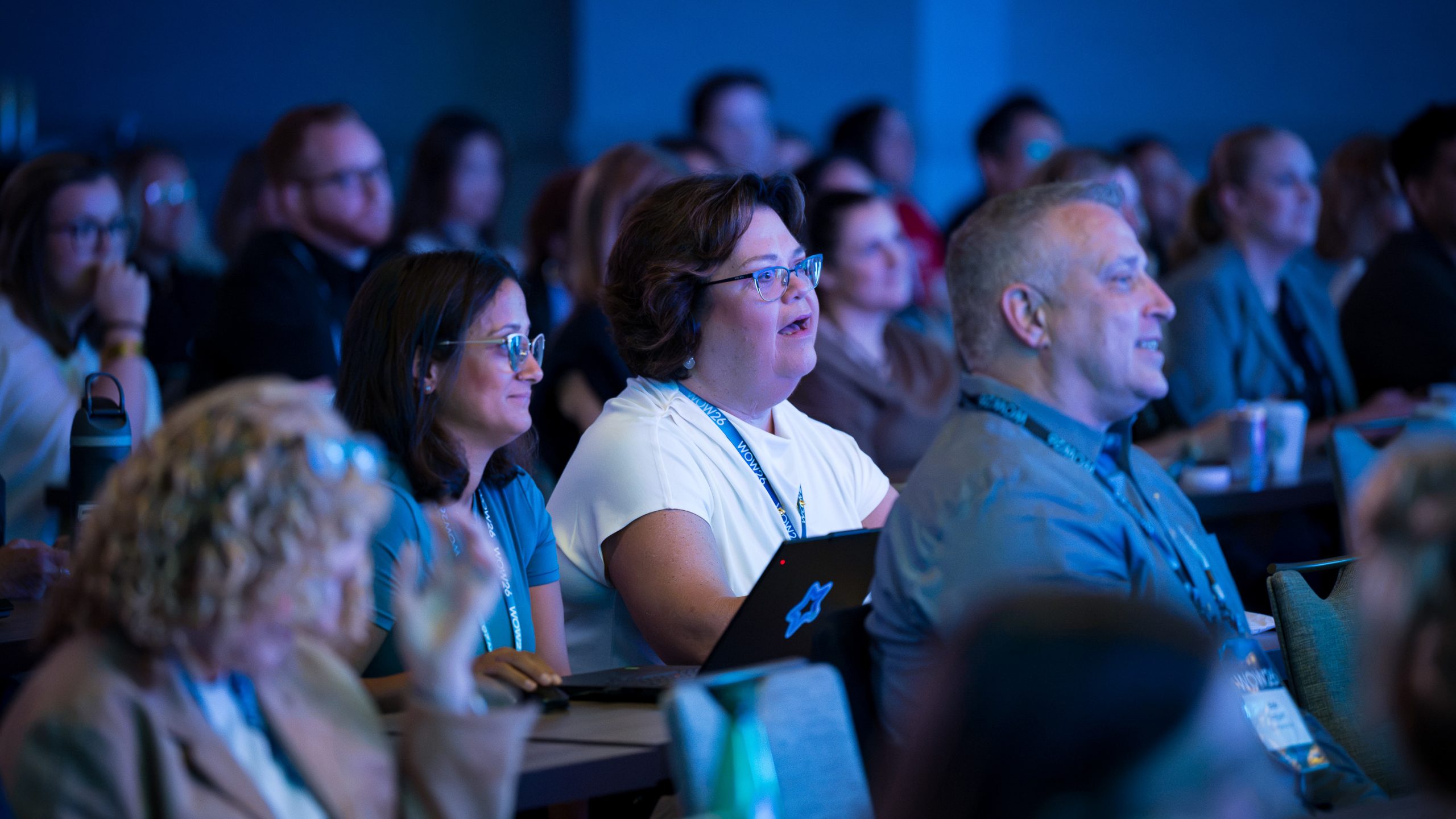
For three days in Scottsdale, workplace leaders from across communications, IT, HR, and facilities came together at WOW26 to talk about what’s changing at work – and what needs to change with it.
This year’s theme was the experience reset. But by the end of WOW, it felt like more than a theme.
The workplace has changed. Expectations have changed. AI is changing how people interact with technology. And yet, too many workplace experiences are still built around separate systems, fixed workflows, and employees figuring out how everything connects.
The conversations at WOW pointed to something different: a workplace that understands more, connects more, and asks less of the person using it.
Here are five shifts that stood out.
1. The experience reset is bigger than a theme
One of the clearest takeaways from WOW was that people aren’t looking for another point solution.
They’re trying to solve the experience across the whole workday.
An employee might start their morning catching up on company news, reserve a desk before heading in, find their meeting room when they arrive, welcome a visitor, search for information, and see an important update on a screen along the way.
To that employee, those aren’t separate categories called “intranet,” “space management,” “visitor management,” and “digital signage.” They’re just work.
But behind the scenes, organizations have often had to stitch those experiences together across different systems, teams, and workflows.
That’s what the experience reset is really about: moving away from managing individual workplace tools and toward creating one connected experience across communications, spaces, signage, access, and the intranet.
And that connection becomes even more important as workplace technology gets smarter.
2. Context is becoming the next layer of workplace experience
Personalization has been part of workplace technology for years. But knowing someone’s role or preferences only tells you so much.
What they need can also depend on where they are, what they’re doing, what’s happening around them, and what needs to happen next.
That’s the thinking behind Appspace Context™.
Appspace already connects signals from across the workplace: communications, spaces, visitors, signage, workplace activity, and other connected systems. Context puts those signals to work so the experience can become more relevant to the person, place, and situation.
Think about the difference.
Someone working from home on Monday may need company updates and easy access to resources. When they head into the office on Tuesday, their priorities could shift to their reservation, where they’re going, who they’re meeting, and what’s happening around them.
The experience shouldn’t make them start from the same place and navigate the same way every time.
It should understand more of the situation.
The interface can change with the moment
That idea comes to life in Organic UI™.
Most software starts with a fixed interface: menus, modules, dashboards, and workflows that largely stay the same. It’s up to the person to navigate through them and find what they need.
Organic UI turns that model around.
Using context about the person and situation, the interface can bring forward the information, tools, and actions that matter now while allowing less relevant elements to recede. The goal is simple: less hunting, less navigating, less figuring out where to go next.
And so can the workplace around you
Context doesn’t stop at a laptop or phone.
Situational Signage applies the same thinking to the physical workplace.
Traditionally, digital signage is programmed around the screen: where it is, which group it belongs to, and what content has been scheduled there.
Situational Signage shifts the focus to what’s happening around that screen.
Location, occupancy, visitors, spaces, and workplace activity can help determine what information makes sense in that place, at that moment. Instead of workplace teams having to anticipate and configure every possible scenario, signage can become more responsive as conditions change.
That’s a very different idea of digital signage. And it’s a good example of what becomes possible when the digital and physical workplace start sharing context.
See why Appspace was named a Gartner® Leader
3. The intranet is becoming part of something bigger
The intranet is changing, too.
For years, it has been treated primarily as a destination: the place employees go for company news, resources, policies, and information.
Those things still matter. But the intranet increasingly sits inside a much bigger employee experience.
It can connect people to workplace services. Surface information from other systems. Reach employees beyond the intranet itself through mobile, email, and digital signage. And become a starting point not just for finding information, but for getting things done.
That evolution is one reason being named a Leader in the 2026 Gartner® Magic Quadrant™ for Intranet Packaged Solutions matters to us.
But the bigger story is what the intranet is becoming: the digital front door to a workplace experience that extends far beyond the intranet itself.
That’s also why we don’t see intranet and workplace experience as separate stories. One is increasingly part of the other.
See why Appspace was named a Gartner® Leader
4. The line between the digital and physical workplace is disappearing
The workplace experience has historically had a handoff problem.
You could reserve the room digitally, but accessing the physical space was another process. Or you could invite a visitor in one system, then deal with their arrival somewhere else. Or you could plan your day digitally, then enter a workplace that knows almost nothing about that plan.
This divide is starting to disappear.
At WOW, we announced our partnership with SwiftConnect, which connects identity and workplace activity with physical access.
A reservation, visitor invitation, new hire, or role change can become a signal that helps trigger the appropriate access based on an organization’s existing security policies. Mobile credentials can be delivered through Apple Wallet or Google Wallet, and access can change again when the booking, visit, or role ends.
The important part isn’t the credential itself.
It’s that access becomes part of the workplace journey instead of a separate task.
That same principle applies to reservations, signage, wayfinding, visitors, and communications. The less employees have to understand where one system ends and another begins, the more the workplace starts to feel like one experience.
5. AI is moving from assistant to actual work
The AI conversation is changing fast. The first wave was largely about answering questions, summarizing information, and helping people create content faster.
Useful? Absolutely.
But the next opportunity is bigger: using AI to take on more of the work behind the experience.
At WOW, Appspace Migration Studio gave us a tangible example. Instead of treating an intranet migration as a massive manual exercise, AI can help analyze and map existing content, identify what’s relevant, and help build out the new environment.
That’s the kind of AI we think matters: not AI added on top because every product needs an AI button, but AI applied to a real problem that takes too much time, effort, or manual coordination today.
And as workplace systems gain more context, AI has more to work with.
It can understand not only the question someone asked, but potentially where they are, what they’re trying to accomplish, what’s happening around them, and which workplace systems can help.
This is when AI starts moving beyond assistance and toward action.
You don’t have to start over to move forward
Maybe the most important part of the experience reset is what it doesn’t mean.
It doesn’t mean ripping everything out and starting again.
Most organizations have already invested heavily in workplace technology, identity systems, HR platforms, productivity suites, access infrastructure, and devices. The opportunity is to make more of those investments work together – and make the complexity behind them less visible to employees.
Connect what already works. Add intelligence where it helps. Use context to make experiences more relevant. Remove steps people shouldn’t have to think about in the first place.
Because the future of workplace experience isn’t about giving employees more technology to manage.
It’s about making the technology around them feel like less work.
Want to see what that looks like in practice?