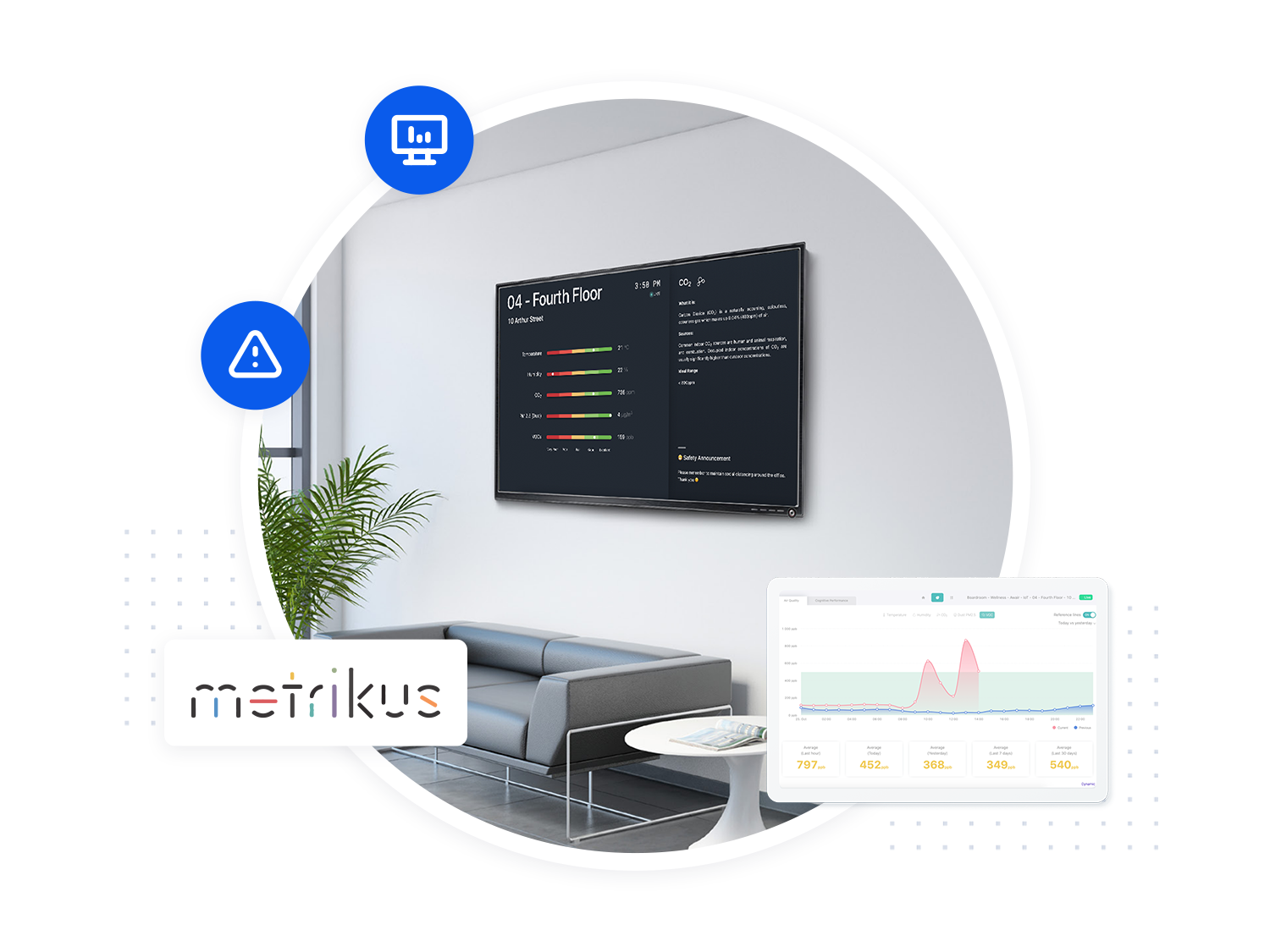
Metrikus and Appspace believe creating seamless experiences for employees is critical to keep teams engaged, safe, and productive. Through employee communications, such as signage or employee apps, we are using real-time data to empower employees.
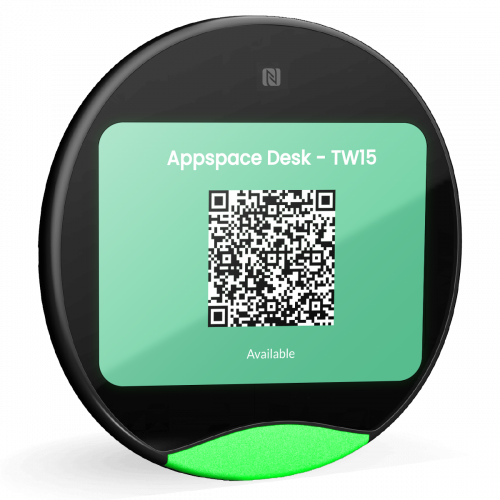
Appspace integrates sensor data from the Metrikus platform allowing organizations to keep their employees informed, safe, and productive. By using signage, we ensure organizations and their employees that indoor air quality is healthy for their teams. Automated systems suggest workspaces based on real-time readings that are comfortable and productive. Sensors automate space check-in and release so teams can focus on what matters rather than remembering to scan QR codes. If you’re interested in how real-time data can empower your employees, Appspace and Metrikus can help. Here’s how:
Why Appspace + Metrikus
Improved health and safety
The real-time alerts through digital signage help employees to be aware of potential health risks and to take appropriate action when necessary, thus promoting a safe and healthy working environment
Increased productivity and improved collaboration
With better air quality, employees are less likely to experience discomfort, headaches, and fatigue, leading to increased productivity and overall well-being. It has been found that employee well-being at work increases worker productivity by a staggering 12%. With insight into occupancy levels, space planning can help employees to find available spaces and more easily collaborate with one another.

Informed decision-making
Employees can make informed decisions regarding the use of meeting rooms and other spaces based on the real-time IAQ data, ensuring they choose spaces that are suitable for their health and comfort
Improved overall work environment
Access to real-time IAQ data can promote a sense of responsibility among employees to maintain healthy indoor air, leading to a better overall work environment for everyone
Enhanced meeting room utilization
Employees can choose meeting rooms that are not fully occupied, avoiding overcrowding.
Reduced waiting time
Knowing the occupancy levels of rooms can help employees avoid waiting for a meeting room to become available, thus reducing downtime and increasing productivity