


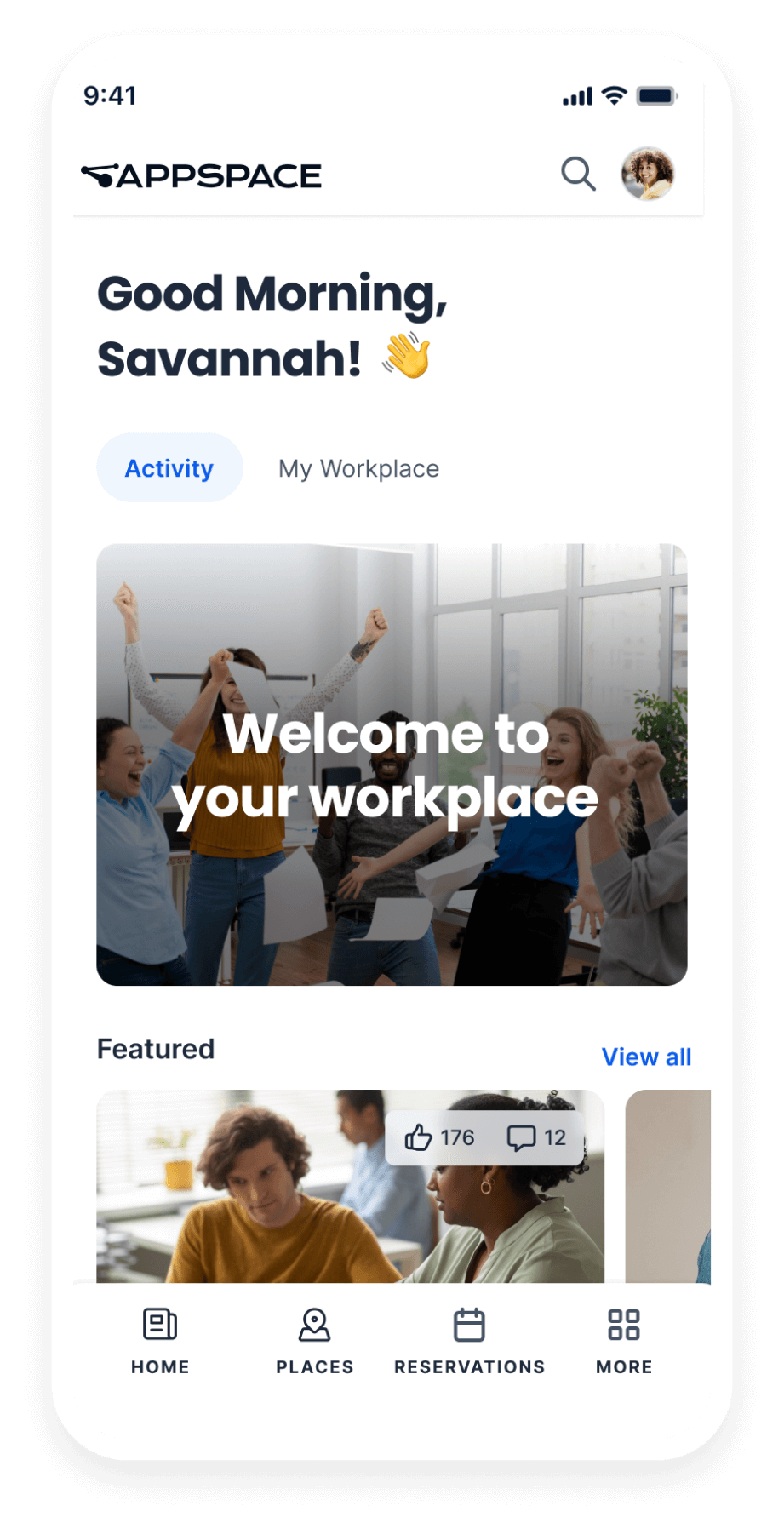
Fix workplace communication failures with smarter employee engagement tools
The reality is, you’re juggling more channels than ever: overflowing email inboxes, chat apps pinging non-stop, intranets full of hidden content, digital signage that’s easy to overlook, and mobile apps competing for attention. And on top of that, your workforce is more diverse, more dispersed, and more distracted. This issue shows up everywhere – from factory floors to hospital wings, from campuses to corporate towers.
Let’s unpack what’s really going wrong – with real examples from industries you know well – and explore how smarter tools and sharper strategies that use the right channels at the right times can make a difference.
Fuel your comms strategies with our ultimate guide to modern workplace communication and management systems.
Key points:
- Poor communication costs companies millions in lost productivity
- Common causes include unclear channels, lack of personalization, and missing feedback loops
- Solutions: consistent messaging, employee engagement tools, and analytics tracking
- Appspace provides a unified platform to fix communication failures across industries.
Top causes of workplace communication failures
Your employees aren’t ignoring you, they’re overwhelmed. The numbers say it all: 82% of workers report struggling to connect and collaborate effectively.
Why? Because workplace communication is often mis-targeted, mistimed, or missing the context that makes it meaningful – and delivered via channels that don’t fit the audience or the moment.
Here’s a look at the main communication channels and the common hurdles you might face:
Intranets: Central, but often ignored
- Ideal for: HR policies, resources, news.
- The issue: Outdated, non-mobile-friendly design, poor search, and hard-to-navigate UX kill engagement.
- Fix: Make sure your intranet is part of a larger ecosystem, not your only communication tool. Employee communication platforms like Appspace bring content forward into personalized feeds, no digging required.
Collaboration tools (Teams, Slack, etc.): Ideal for chats, not broadcasts
- Ideal for: Quick chats and team updates.
- The issue: Updates are easily lost in the noise.
- Fix: Keep them for team convos; use broader, more persistent channels for company-wide news.
Digital signage: High visibility but low personalization
- Ideal for: Frontline workers, shared spaces and high-traffic areas.
- The issue: Static loops are easy to ignore.
- Top tip: Use interactive signage (like touchscreen kiosks powered by Appspace) for hands-on engagement – especially where desktop or mobile access is limited.
Employee mobile apps: High reach, but only if intuitive
- Ideal for: On-the-go teams, urgent updates.
- The issue: Clunky UX and irrelevant alerts drive people away.
- Fix: Prioritize clean design, personalized feeds, and useful notifications that keep people coming back.
The root problem: Misaligned communication
Often, it’s not the channel – it’s the approach. Messages often miss the mark because they:
- Aren’t tailored to the audience
- Arrive at the wrong moment
- Lack context or clarity
- Miss a clear action or follow-up
The fix is smarter, more intentional communication. When employees feel like communication is designed for them – not just sent to all – it starts to stick.
Real-world scenarios: What happens when communication fails?
Every organization faces communication challenges, but how those challenges show up can vary widely by industry. Here’s where good communication can make all the difference.
Manufacturing: Reaching the frontline, fast
Scenario: New compliance requirements mean a safety protocol has changed. The update is emailed to employees, but many factory workers don’t have email access during their shifts. Days later, a machine is shut down due to improper usage – something the new policy was meant to prevent.
What went wrong: Critical information didn’t reach the people who needed it most – when they needed it.
What works better: Delivering the update via digital signage in breakrooms, push notifications on a mobile app, and a short explainer video pinned to a personalized feed – so employees see it, understand it, and act before there’s a risk.
Healthcare: Fixing the information gaps in healthcare
Scenario: A hospital updates its infection control procedures. The memo is shared during shift handoffs and posted on the staff intranet. But some part-time nurses miss it entirely, and outdated procedures are still being followed in some departments.
What went wrong: The message was shared inconsistently and relied on manual distribution and static channels.
What works better: A centralized employee communication platform with mobile access gives all staff – regardless of shift, role, or location – access to critical updates in real time. With acknowledgment tracking, leaders can confirm who’s seen and read the message, reducing risk and reinforcing accountability.
Corporate offices: Keeping hybrid teams aligned
Scenario: A company rolls out a new flexible work policy, including changes to space reservation and in-office scheduling. The update goes out via an all-hands meeting and a long email follow-up. A week later, employees are frustrated by unclear expectations, missed bookings, and confusion around availability.
What went wrong: The message was buried and didn’t support ongoing reference.
What works better: A bite-sized, mobile-friendly summary in each employee’s personalized feed, paired with quick access to workplace tools (like desk booking) right from their device, helps teams adapt faster and with less friction.
Education: Engaging faculty and staff across campuses
Scenario: A school district wants to promote a new mental health resource for teachers. It’s posted on the intranet and mentioned in a superintendent’s email. But many teachers never see it, and awareness remains low.
What went wrong: The message was passive, not targeted, and didn’t reach educators on their preferred channels.
What works better: A short, personal video from the superintendent, shared via mobile and desktop feeds, plus signage in staff lounges and automated follow-ups based on engagement, can boost visibility and drive actual usage of the resource.
Pro tip: Take a look at Appspace Orchestration for a smarter way to manage your workplace comms.
The common thread: Why your employee communication is failing
When communication is clear, relevant, and well-timed, people take action. When it isn’t, safety, satisfaction, and trust take a hit.
You don’t need more tools – you need a smarter employee communication platform that:
- Centralizes messages
- Personalizes delivery
- Measures effectiveness
- Reaches everyone, everywhere
Proven strategies to improve employee communication
Great communication comes down to four things: clarity, consistency, accessibility, and relevance – no matter where your team works. Here’s how to put those principles into practice:
1. Start with the audience
Instead of asking what to say, start with who needs to hear it – and why. Tailor content by role, location, and device. For example, a sales team may need a different take on a policy update than warehouse staff. Pro tip: Segment your audiences and use message templates that speak their language.2. Choose the right channel for the job
Use each channel for what it does best – and reinforce messages across touchpoints. Pro tip: Reinforce key messages across multiple channels to boost visibility.3. Keep it short, visual, and action-oriented
Use bold headlines, bullets, and CTAs. Break up long content with visuals or video. Pro tip: Use video or visuals to simplify complex topics, especially for frontline teams.
4. Make it interactive
Don’t just broadcast – engage. Let employees take action: RSVP, complete training, book a space, or share feedback.
Pro tip: Use tools like interactive digital signage and personalized dashboards to boost engagement.
5. Track what’s working
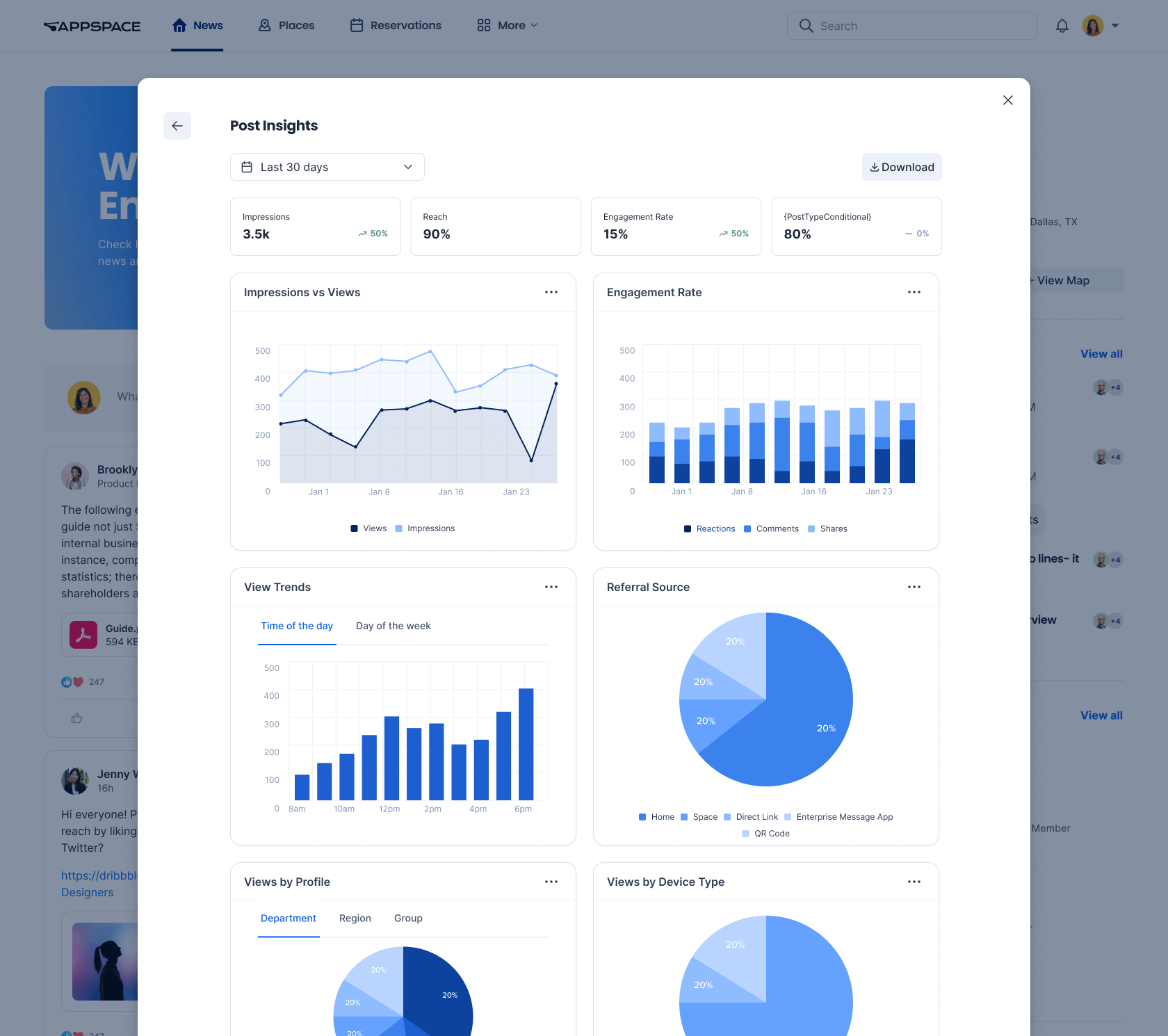
Use analytics to guide your strategy. What’s seen? What’s ignored?
Pro tip: Monitor opens, clicks, and acknowledgments. If key messages aren’t landing, tweak the channel or format.
6. Build a culture of communication
Tools support your strategy, but culture drives it. Make communication a two-way street.
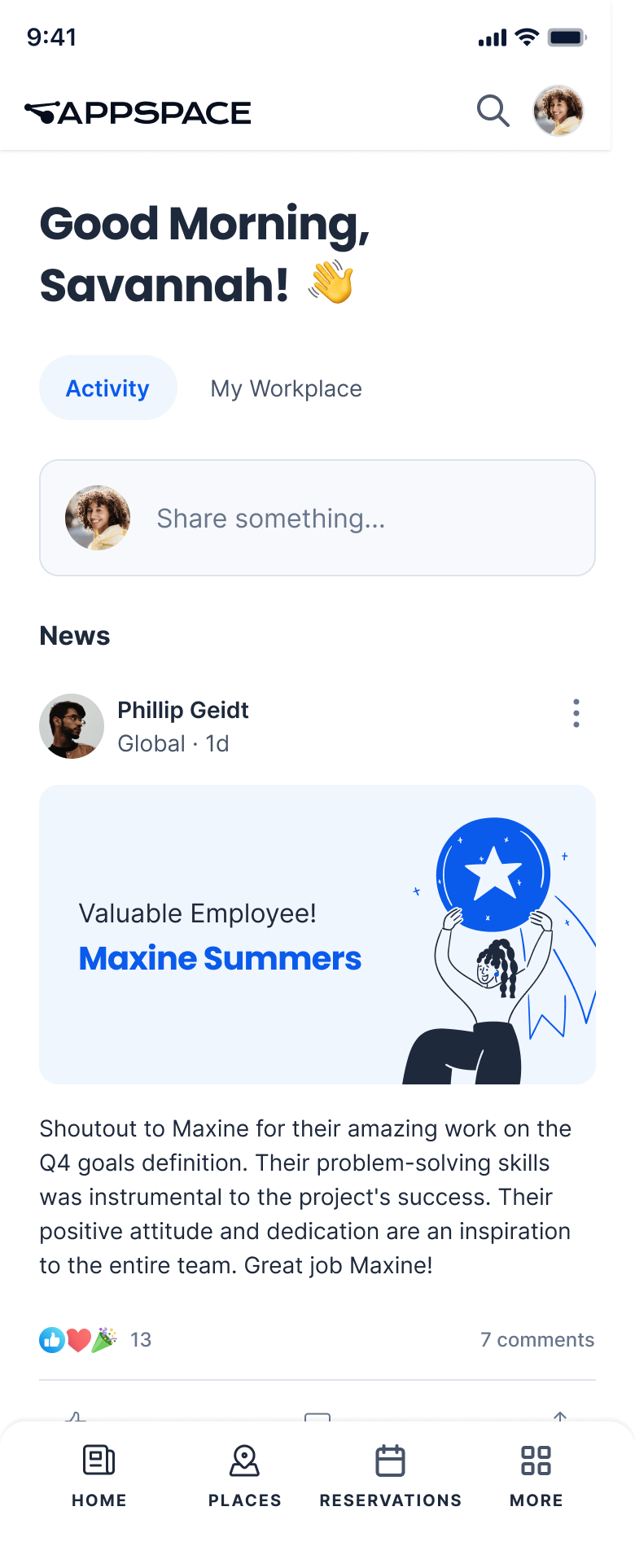
Pro tip: Celebrate wins, spotlight teams, and welcome new hires to build a connected workplace.
Trust starts with the right technology
Trust is at the heart of great workplace communication – without it, even the best messages can miss the mark. The right technology helps bring that trust to life, making communication more transparent, consistent, and easy to access. With Appspace, employees can count on getting the right information at the right time, helping everyone feel more confident, connected, and engaged at work.
It’s time to simplify workplace communication
Whether you’re supporting teams on a factory floor, hospital wing, hybrid office, or campus, the same rules apply to workplace communication:
- Be clear. Say what matters, without the clutter.
- Make it relevant. Tailor content to the person and their day-to-day.
- Use the right channels. Reach people where they actually are.
What you can do next
- Take stock of what’s working – and what’s getting missed.
- Match your messages to your audience and channel.
- Look for small tweaks that can make a big difference.
If you’re looking for a simpler way to connect with employees – whether that’s through email, mobile, digital signage, or all of the above – Appspace can help.
Explore how our workplace communications solutions fit into what you’re already doing, and make it easier to keep everyone in the know. And if you’re ready to see Appspace in action, let’s schedule a demo.

Frequently asked questions
What are common causes of workplace communication failure?
It usually comes down to a few common gaps – too many disconnected channels, messages that feel one-size-fits-all, limited opportunities for feedback, and inconsistent updates. When those add up, it’s easy for people to feel out of the loop or disengaged.
How can technology improve employee communication?
The right technology brings everything together in one place – making communication more consistent, personalized, and easy to access. From tailored content feeds to real-time insights and mobile-friendly experiences for frontline teams, platforms like Appspace help everyone get the right information at the right time.
What industries face the biggest communication challenges?
Some industries feel it more than others. Manufacturing, healthcare, and education, for example, often support frontline and hybrid teams while juggling strict compliance requirements. That’s why flexible, tailored communication solutions are so important – they help meet people where they are and keep everyone connected.