

Employee connections and safety: How facilities leaders can build smarter, safer workplaces
If you’re in facilities you’re likely juggling half-empty floors, overbooked meeting rooms, and a mobile workforce whose movements are hard to predict.
Sound familiar?
- Your real estate footprint is underutilized.
- Your desks, rooms, and spaces aren’t all on the same system.
- Employees are confused about where to go, what’s available, or how to check in.
- You’re expected to maintain safety standards while also improving the workplace experience.
As a facilities leader, you’re right in the middle of it all, making sure buildings are safe, people stay informed, no one’s left wandering the halls, and everything’s running smoothly.
That’s why employee connections and employee safety need to be part of the same strategy.
The good news is that with the right digital tools and space planning mindset, you can create an environment that’s easy to navigate, safe to work in, and connected enough to feel like home – whether someone’s in the workplace every day or once a month.
Let’s break down how that works…
Why do employee connections matter in the workplace?

Because employee engagement is slipping. Just 21% of employees worldwide are engaged at work, according to Gallup’s latest research, down 2% from 2024. And that matters. Highly engaged teams consistently outperform others on the business outcomes that drive success.
So, employee connections aren’t just about water cooler chats (though those matter too). They’re about making sure people feel informed, included, and supported, wherever they’re working.
Strong workplace connections:
- Improve engagement and reduce turnover.
- Help employees navigate physical and digital spaces with ease.
- Strengthen culture across remote, hybrid, and in-person teams.
- Create a sense of purpose and belonging that’s tied to place.
And most workplaces are getting it wrong. 82% of employees face challenges in connecting with employees, according to Appspace research.
Facilities leaders play a key role here, through thoughtful space planning, technology choices, and the way information is shared throughout a building. When your signage, kiosks, and collaboration tools are working in harmony, the workplace starts to feel like a connected ecosystem, not a confusing maze.
Looking for the bigger picture on how this fits into your workplace strategy? Start with our Ultimate guide to modern workplace communication and management solutions.
How can digital tools support employee safety without friction?
Workplace safety shouldn’t slow people down. The best systems are the ones employees hardly notice, they just work.
Modern solutions support:
- Contactless check-ins and QR code access, reducing bottlenecks and physical touchpoints.
- Occupancy monitoring and capacity limits, helping manage high-traffic areas.
- Automated alerts and updates, so employees stay informed in real-time.
- Localized restrictions and permissions, customized by floor, campus, or region.
This allows facilities teams to create a layered approach to safety and building access that’s clear, consistent, and aligned with local needs.
Pro tip: Set building-level rules that automatically trigger based on bookings or passes. That way, your team isn’t chasing down approvals, it’s baked into the system.

How can employees stay connected in a hybrid or multi-site workplace?
In a hybrid world, connection needs to be intentional. Facilities teams can support this by making sure digital and physical spaces are in sync.
The best ways to support connection:
- Offer mobile-first access to building info, maps, and space reservation tools.
- Use digital signage and room displays to keep messaging visible and relevant.
- Create a single source of truth – like an employee app – where people can see updates, reserve workspaces, or check in remotely.
Employees are more likely to show up when they can easily find each other, book a desk, or stay updated on building events. They’re also more likely to feel that their time in the office is worthwhile.
What role do building passes play in employee safety and space planning?
Think of building passes as the new front door. They’re not just about access control, they’re about giving Facilities leaders the visibility and flexibility to manage capacity and safety intelligently.
Smart building pass systems allow you to:
- Limit access to certain floors or buildings based on policies.
- Control who can reserve space and when.
- Track usage patterns to make informed decisions about office layouts, staffing, or services.
- Respond quickly during emergencies or peak times.
Bonus: It empowers employees to plan ahead and reduces the chance of unexpected crowding, which is really useful during flu season or high-traffic events.
How can workplace design encourage safe and meaningful connections?
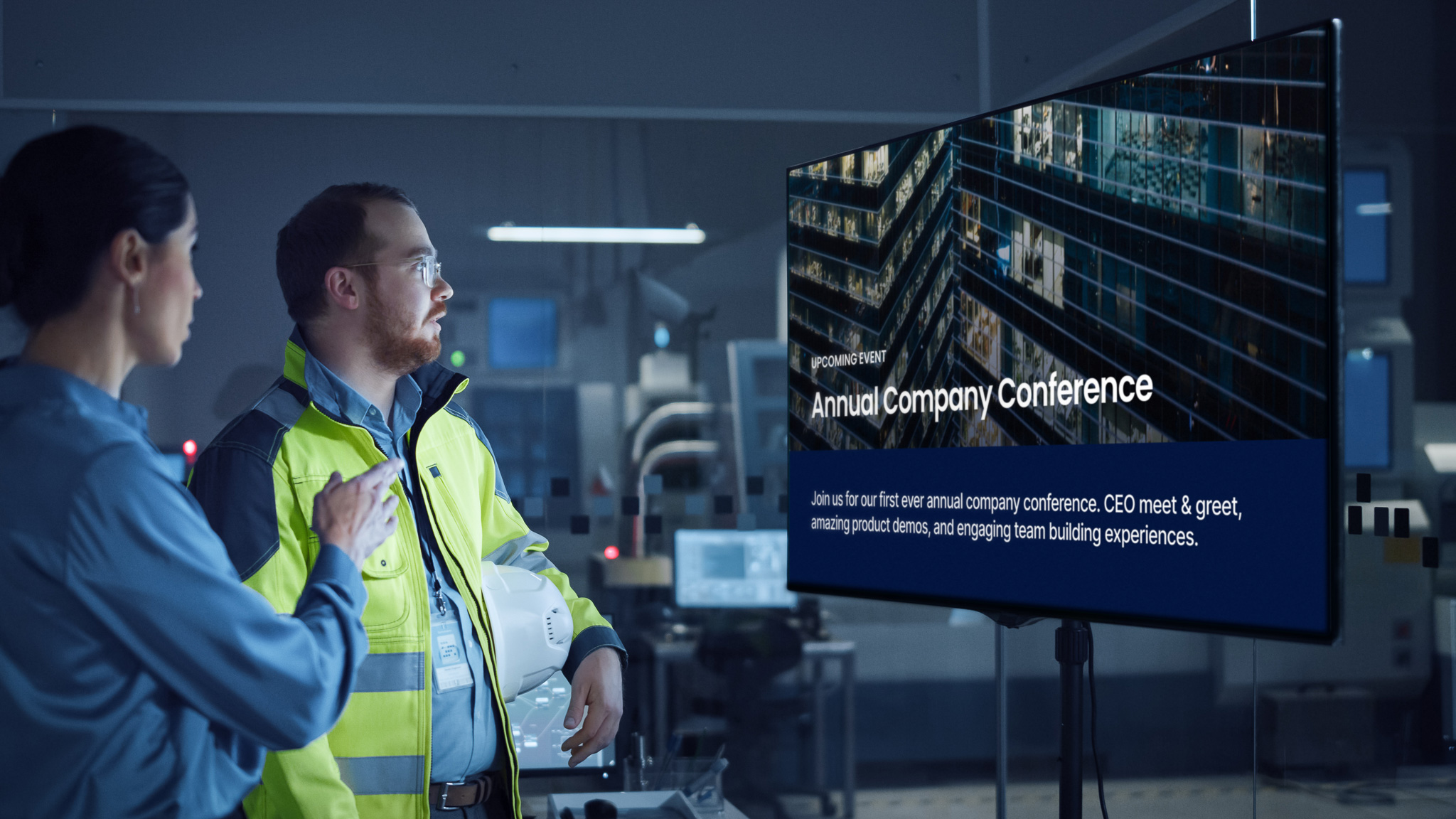
Physical space is a powerful communicator. The way your workplace is laid out can nudge behaviors, signal priorities, and encourage interaction – or do the opposite.
Facilities teams can promote safety and connection – and create a commute-worthy experience – by:
- Designing flow paths that reduce congestion but still encourage natural interactions.
- Creating varied zones (quiet, collaborative, social) that suit different needs.
- Installing kiosks or video walls in key areas to share timely updates and company news.
- Using dynamic and localized digital signage, not just printouts pinned to the wall.
It’s about giving employees what they need to feel both informed and in control, without overwhelming them.
Take a closer look at workplace best practice: a smart building that prioritizes employee wellbeing.
How do we measure success when it comes to employee safety and connection?
Data is your friend. Great platforms now offer real-time analytics that help facilities teams track:
- Space usage trends by day, department, or location
- Employee check-in and building entry patterns
- Content engagement (e.g. who’s seeing your signage or reading safety alerts)
- Compliance with occupancy limits and policy reminders
These kinds of insights help you adjust before problems arise. And they arm you with the evidence you need when advocating for new technology or layout changes.
What are the benefits of managing everything from one platform?
When everything – building access, room booking, workplace content, wayfinding, and employee check-ins – is handled through one secure system, you eliminate so many of the pain points that slow people down or cause confusion.
Here’s what a single platform approach unlocks:
- Fewer systems to manage: Instead of juggling multiple tools for reservations, content updates, and access control, your team gets one clear interface. That means fewer headaches for Facilities, IT, and the employees using it.
- Smarter decisions, backed by data: When everything runs through one system, analytics become more meaningful. You get a full picture of how your spaces are used, where bottlenecks occur, and what changes are working, so you can optimize in real time.
- Consistent employee experience: Whether someone’s working from HQ, a satellite office, or visiting a different campus, they get the same simple check-in, wayfinding, and workspace booking process. They’ll instantly feel at home with no surprises, no re-learning.
- Better communication: Having one place to push news, alerts, or safety messages –across all your devices and displays – means people can see what matters. You avoid inbox overload and reach employees where they are.
- Stronger safety and compliance controls: From occupancy limits to health protocols, it’s easier to apply policies consistently across locations when everything is managed centrally. Local teams still have flexibility but with important guardrails in place.
One platform gives you visibility, control, and confidence. And in a world where flexibility is the norm, consistency is what keeps everything (and everyone) working together smoothly.
What’s one thing facilities leaders can do today?
Start small, think big. If you’re not already offering mobile access or digital passes, consider piloting it in one building or team. If your signage is underused, think about how it could deliver more useful, real-time information, not just screensavers.
And talk to your colleagues in IT, Comms, and HR. Connection and safety aren’t just facilities issues, they’re shared priorities. A quick sync today can lead to a smoother, smarter workplace tomorrow.
As Facilities leaders, we have more tools than ever to build spaces where people feel safe, connected, and empowered to do their best work. By pairing thoughtful design with the right digital systems, we’re not just managing buildings, we’re shaping culture. That’s a responsibility worth investing in.
Take a closer look at Appspace, and schedule a demo to see it in action.